

Google’s Latest Core Update: What Changed and How to Recover
My traffic graph appeared as though someone had drawn a cliff with a red marker. Suddenly, three of my best-performing pages, those having quietly brought steady search traffic for more than a year, disappeared from the first page.
No warning email, no manual action notice in Search Console. Just… gone. In this article, we are going to discuss everything about the Google Core Update.
That’s the July 2026 core update for you.
Assuming you’re reading this because your analytics dashboard has overnight turned into a ski slope. No, there is no imagination involved and, more importantly, you are not the only one here. Google launched the core update this time on June 28, and by the time it wrapped up on July 9, rank trackers everywhere were on fire, red, and even some orange.
It was Google’s fourth confirmed algorithm update of the whole year for real, which actually says how fast the ground has been moving under all of us in 2026.
Okay, But What Actually Changed This Time?
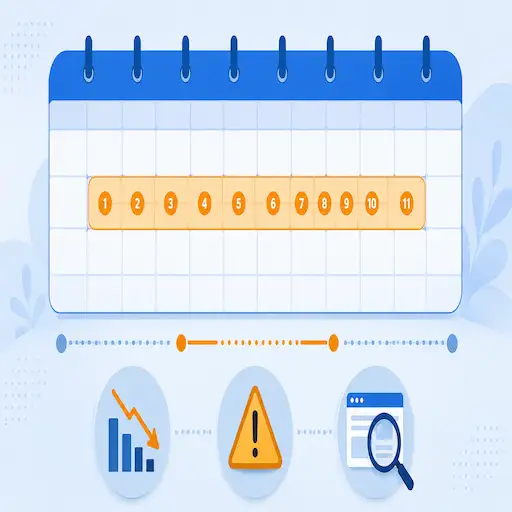
One reason why July has been a very different experience compared with a “usual” core update is that it was not a broad-scale, every-page-will-change type of change. On the contrary, it seemed quite like a precise attack.
The first few analyses suggested Google was probably introducing more sophisticated classifiers designed mostly to detect AI-generated article factories and low-quality affiliate websites, besides flagging pages that obviously lack effort, also considering whole clusters or content sets that look like they work together.
For example, mass-produced articles created via Jasper or the like, bare-bones GPT workflows, “best of” roundup pages where no testing or product use is shown, template websites whose About page states they have an expert team but in reality no proof of their expertise is visible at all across the site, and sites that built their reputation mostly through link-building without having earned mentions.
Which were the fields most severely hit? Reviews on Virtual Private Networks, comparisons between web hosting, guides on insurance, and software review sites, some reporting traffic drops of 40 to 80% within the first three days. That’s just the biggest reason you have not been in your favorite Tuesday coffee place.
Also, it’s not only those big-name updates that can cause changes. Google quietly indicated back in July that from then on, even small core adjustments will run continuously in the background and there won’t be announcements or releases anymore. So you probably saw a sudden drop 2 weeks before the regular update was rolled out? Well, that could mean that there was a different core update or Google adjustment before that, just a smaller one and not much discussed.
The Part Nobody Wants to Hear: Wait Before You Panic-Edit
I understand. Your first instinct, once hit, will be to begin rewriting everything right away, delete the dropped piece, the one that failed the hardest, and publish 5 new pieces to sound like a “new” direction. I’ve done this myself after a prior update, and it really just ended up blowing my whole weekend.
Give it a 2-3 full weeks after rollout is completed before you consider a given ranking change to be genuine and permanent.
Find the trend line over the entire volatility window, not simply over the worst day. Much of what appears to be a “drop” is Google re-weighting signals it has previously collected, and things normalize once the algorithm stops grinding.
Before you even get near a single word on your site, identify exactly what kind of problem you’re up against here, as the solution is entirely different related to cause. Core update drop: Your position in Search Console went down, and with it your impressions. Google is now ranking your page lower than before.
This is the archetypal core update fingerprint. AI Overview squeeze: Your ranking barely changed, but the number of clicks and click-through rate took a nosedive.
This is not a ranking issue; Google is providing a full answer to the query at the top of the SERP, and people are simply not scrolling down anymore to click through to your page. No amount of rewriting your content will solve this; it needs a new approach – normally focusing on queries where a direct AI answer does not completely satisfy the searcher.
Compare both metrics side by side in Search Console for the pages you are impacted on. What that ten-minute look does is narrow down which war you are truly battling.
How to Actually Diagnose What Hit You
If, to start with, you’ve ruled out that your ranking fall was just caused by AI Overview taking away clicks, as it has happened to many others, and that it’s really a ranking drop issue, then where I think you truly should focus your time is:
Start by checking practical content. Go through all guides, step-by-step or instruction-style articles on your website. Are the screenshots still fresh? Are the version numbers of the software and apps mentioned the same as currently available ones? Will a person who follows your steps now actually have success, or did the UI change 18 months ago unnoticed, causing your guidance not to be up to date anymore? Google algorithms seem to be mostly trained to find the discrepancy between an article that ‘sounds authoritative’ and one that ‘was actually tested by a human.’ Check your backlink profile closely.
If you want to read more such articles, you can visit our blog page. It contains all major updates, tips, and tricks related to SEO.
If a good portion of backlinks came from your aggressive content marketing activities via guest blogger campaigns, link networks, or other similar tactics, that’s precisely the kind of situation that was meant to be caught by this update.
It is definitely going to take time to have a link-building strategy that is based on genuine earned mentions (i.e., getting featured by real industry players rather than having paid placements pretending to be organic placements). Yet, it is that kind of authority only earned through genuine means that is going to be around even after such updates. Incorporate the caveats or exceptions that only come with hands-on experience. You will be surprised just how many people miss this part because it’s a bit of a pain.
A genuine product review would, for instance, tell of that setup inconvenience which most of the people do not mention. A real user guide, for example, is the one that tells you about the particular error message coming up on certain settings, etc. These highly specific, slightly messier details are a nightmare to fake if anyone tries. It’s exactly the feature that makes the core update survivor content different from the other one that ended up with content farms.
What Recovery Actually Looks Like
Sorry to put it so bluntly, but it’s the truth: there is absolutely no appeal against this, and there’s no magic bullet either. The core update ranks your content again for the whole Web, and as a result, complete recovery of position may slowly come around, sometimes not fully until the next big core update comes out.
That being said, I have seen websites that were able to recover the biggest part of lost visits within six to eight weeks, way before the next core update happened, so definitely, it is not pure waiting for the update to come out. The ones that survived the best in such a crisis situation are the ones that saw this as a turning point rather than a catastrophe.
Google offers information on the definition and evaluation of core updates in Search Central as official guidance. Various factors could cause fluctuations in rankings as well, like seasonal trends or changes in competition. SEO news sites have an agenda to sell you a “guaranteed recovery” package or some such thing.
Their approach was totally different: instead of publishing solely for it, they took time to review and revise the old content to keep what is relevant and remove what is not anymore. In short, they made sure that anyone who knows the topic and reads their material doesn’t find it superficial or misleading.
FAQs about Google Core Update
How can you know if you were hit by the July 2026 “core update?”
You can go check your Search Console performance graph for a significant drop starting around June 28 through July 9. If your decline matches that timeframe and you notice a decline in positions but clicks remained unchanged, you’ve likely been hit by this update.
Will I see a natural improvement of the situation over time?
Sometimes, partially, it’s been known that Google sometimes performs smaller, unannounced fine-tunings after major updates that only barely affect positions. But to totally bounce back from a quality-focused update like this one, you probably have to address and rectify content-related issues that led to the situation.
Should I take down pages that took the hit really badly?
No, not right away. First, try to understand the nature of the content. You either can fix it (out-of-date info, insufficient content, no real testing behind data) or it is low value from the start. Generally, pages that are still fixable are worth keeping. Those pages which exist strictly to capture search traffic without delivering any value can be cut up instead of trying to repair them.
When is the ideal time to start implementing changes?
Two to three weeks after the officially announced roll-out has ended, so that you don’t react to the mid-roll change noise but follow the true trend.
4 Comments